





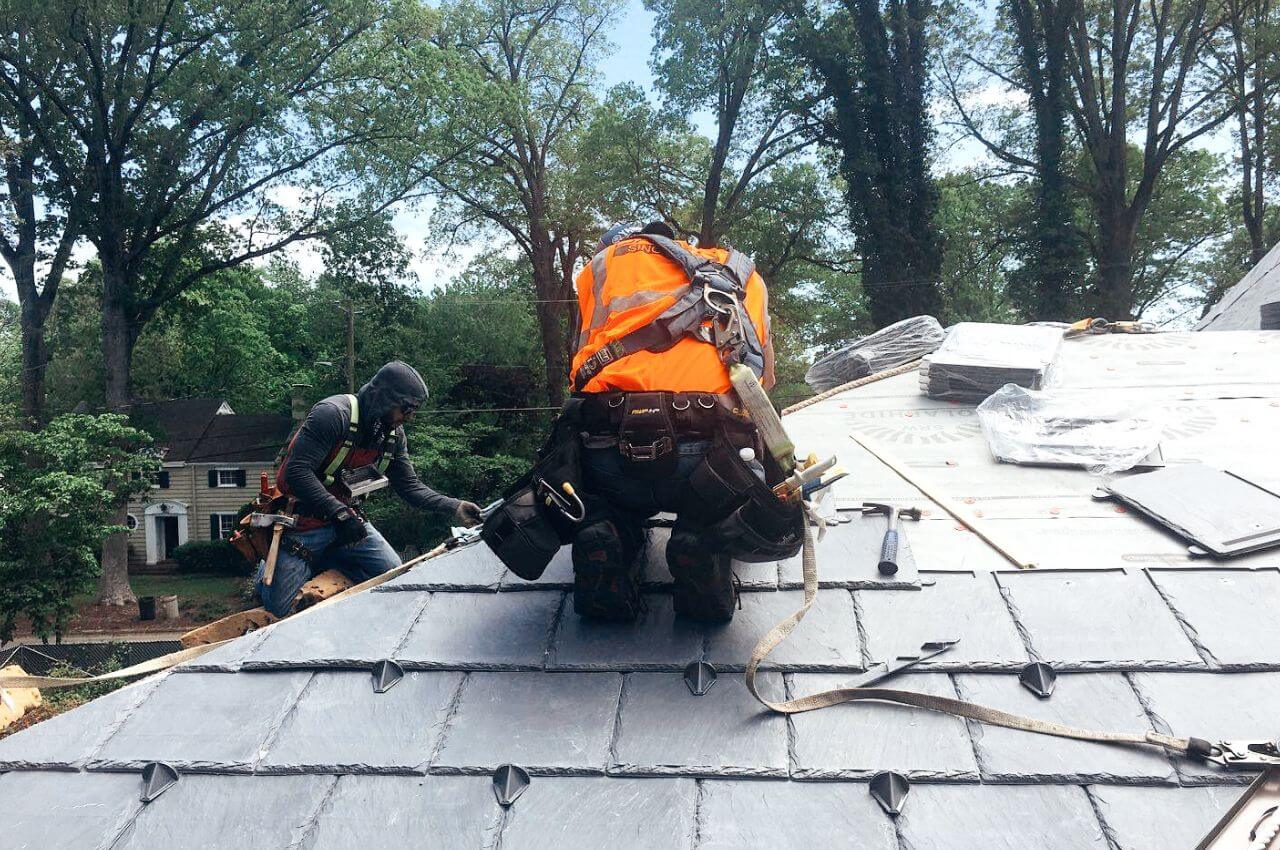
How to Detect Proper Signs of Storm or Hail Damage on Your Roof
The roof is one of the very crucial elements of your house, and yet one of the simplest to forget about following a storm. Strong winds and hail can do some damage that is not always apparent on the ground, and little issues may become huge ones when left unsolved. It may be better to know how to recognize the early warning signs that would allow homeowners to act promptly and prevent the appearance of more significant problems in the future.
The first thing to know is that hail and wind do not have the same impact on the roofing materials. Hail can cause impact damage, and wind tends to blow roofing parts or dislodge them. In other instances, both forms of destruction occur in the same storm, thus the need to check the roof thoroughly.
Begin with a ground-level visual inspection
It is common to find that a great number of homeowners will seek only the most obvious indicators of a storm, like missing shingles or tree limbs on the roof after it. Although those are significant indicators, there are other indicators of concealed damage that are subtle. Go around your house and check the ground to see whether there are any shingles, flashing, or other roofing materials. Asphalt hail may also accumulate in gutters or downspouts where granules of the shingles are collected. Granules protect the shingles against exposure to UV rays and weathering, and hence, loss of granules may reduce the lifespan of the roof.
Metal parts, including the vents, gutters, flashing, and downspouts, should also be checked. These materials can also have dents or dings, which can indicate that the roof itself was directly hit by hail. Although the shingles may not be damaged as seen at a distance, the presence of an impact mark on adjacent metal surfaces may be one of the first hints that a closer examination of the area is required.
Look for Signs of Hail Damage
Hail damage does not necessarily become dramatic. On asphalt shingles, it can be manifested in the form of dark spots, bruising, or small circular spots where granules have been knocked off. Assuming that you can safely observe the roof, maybe not by standing on it, but by using a ladder, then look at the flat parts, or those that appear to be dissimilar in their feel or color. These spots might not be impressive,e but they can allow the shingles to be exposed to moisture and sunlight and deteriorate in the long run.
Damage may not manifest itself with other roofing materials. Wood shingles have the ability to split, metal roofs can dent, and slate or tile can crack. The trick is to search for things that seem to have been damaged recently during a storm, and even more so when the roof did not have any problems previously.
Watch for Wind Damage Clues
Wind damage typically starts at the roof’s edges, corners, and ridges, where the shingles are most vulnerable to uplift. For a shingle to be damaged, it doesn’t always need to be completely gone. It can break the seal that aids in water out by curving, raising, loosening, or creasing. Rain and wind might cause even more issues if that seal is compromised.
Look for locations where shingles are no longer flat or rooflines that appear to be uneven. Additionally, flashing surrounding vents, skylights, or chimneys may pull away. Additionally, once the elements are released, they are common locations where wind precipitation is likely to enter.
Check Inside the Home Too
Roof storm damage may not manifest itself on the outside first. In some cases, the first signs can be noted within the home. Stains on the ceiling or walls by water, which are peeling away, insulation in the attic, which is damp as a result of heavy rain, or the odor of moldiness which follows such a downpour are all indications of roof trouble. These are the symptoms that might be evidence of the fact that hail or wind damage has already prepared a way for moisture.
The attic particularly comes in handy in early trouble detection. Find the sunshine through the roof boards, wet spots, or visible evidence of a leak around the vents or seams. Early detection of these problems can largely lead to mold, rot of wood, and destruction of the insulation.
Don’t Ignore Minor Damage
This is one error that homeowners commit because they believe that minor storm problems can be postponed. The loss of a patch of granules or lifting shingles might not appear to be a pressing issue, but roofing systems are designed to operate together. As soon as one of them is damaged, the others become exposed. The initial damage caused by a storm may be slight, but left unchecked, it may cause a leak, structural wear, and an even more expensive repair.
That is why it is important to evaluate them in time. Damage may be as simple as a leaky roof, but before the damage goes beyond that, it can be prudent to seek professional evaluation before it is too late. Early issues can be solved to maintain the integrity of the roof and avoid unnecessary damage to the interior.
Safety Comes First
Homeowners are not allowed to climb on a roof that has been damaged by the storm, unless they are equipped and trained to do so. Roofs become dangerous due to wet surfaces, loosely laid shingles, and concealed weak areas, even after harsh weather. An aerial view, whether on the ground, through a window, or from a ladder standing in a safe location, may be of assistance, but anything beyond that is to be left to a professional.
Final Thoughts
This damage from hail and wind is easily undetected in the days after a storm, particularly when the roof seems untouched in many areas. Nevertheless, there is always a probability of early indicators of loss of granules, indentations on metal parts, shingles raised, broken materials, and moisture stains on the inside, which must be noted. Early detection of these signs will provide the homeowner with the most opportunities to reduce the amount of damage in the long term and preserve the functionality of the roof.
The roof does not need to lack huge parts to have issues concerning the storm. There is also sometimes a subtlety about the first warning signs, which are, however, significant. You should take time to make a check-up after harsh weather, and you will be able to identify problems before they get so serious.